

Venezuela, Iran, Greenland — What Is the United States Trying to Achieve?
Over the past several months, the United States has accelerated on multiple fronts in parallel on the international stage:
a “oil-and-finance re-engagement” track involving Venezuela,
a “tariff pressure + Arctic security + resource narrative” track around Greenland, and
a “sanctions escalation + regional force-posture adjustment + proxy-network disruption” track aimed at Iran.
Viewed as isolated headlines, these developments yield only fragmented takeaways. Placed on the same map, they look more like a harder, more transactional form of state capacity projection: using energy and critical minerals to underwrite supply chains and the defense-industrial base; using tariffs and new mechanisms to re-sort allied alignment; and using sanctions plus military signaling to steepen the cost curve for adversaries and regional states.
Venezuela: On the Surface “Oil,” In Substance “Oil + Cash-Flow Channels + FX/Financial Order”
The Venezuela track is ostensibly about crude, but operationally it is about crude plus a controllable payments and settlement architecture.
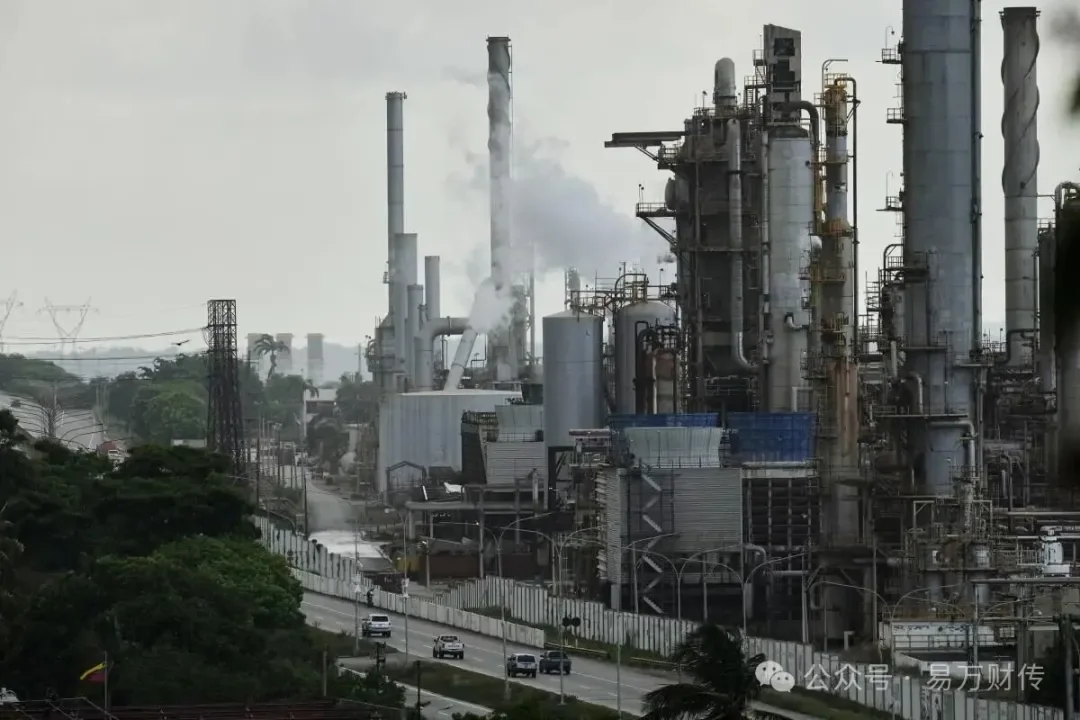
Reuters has reported that the United States has completed a first sale of Venezuelan crude as part of an arrangement totaling roughly $2 billion, with further sales expected. Reuters also reported that a portion of the proceeds is routed into an account in Qatar, corresponding to the value of approximately 30–50 million barrels of crude. The implication is that the United States is not merely allowing a single company to transact; it is attempting to bring part of Venezuela’s “export → settlement → account” chain into a governed and controllable framework.
In the same reporting, Reuters said Venezuela’s central bank injected roughly $300 million into the market via a local bank—funding linked to Venezuelan oil revenues under U.S. control—to support the FX market. The report also noted that the local currency had depreciated sharply against the U.S. dollar over the past year (Reuters cited approximately 83%).
This matters as a “financial order” lever because it effectively turns a resource producer’s hard-currency inlet into an adjustable valve. When the United States needs incremental heavy crude supply, seeks to compress oil’s geopolitical risk premium, or wants an alternative supply curve while pressuring other producers (e.g., Iran), Venezuela becomes the most practical “backup barrel.”
A separate Reuters exclusive described the architecture more explicitly: Chevron is expected to receive an expanded Venezuela license enabling greater production and exports; and beyond Chevron, Marathon, Valero, and certain international traders have been discussing with Washington pathways to obtain licenses and access Venezuelan heavy crude. This “license–quota–buyer list” design effectively converts sanctions from a binary prohibition into a rationing regime—one that can be tightened at will, loosened in phases, and used to determine who benefits and who bears the pressure through buyer eligibility and settlement rules.
Greenland: Political Theater on the Surface, Non-Hollow on Economics and Security
The Greenland track can look like political drama, but it is not empty from either an economic or a security standpoint.
Reuters reported on January 19 that Germany’s and France’s finance ministers said publicly they would not accept being “blackmailed,” and that Trump had used the threat of higher tariffs to pressure for U.S. permission to purchase Greenland. Reuters said EU-level countermeasure discussions included a tariff package targeting roughly €93 billion of U.S. imports, as well as potential use of the EU’s previously “untested” Anti-Coercion Instrument, which could extend to public procurement, investment, banking activities, and trade in services. The key signal is that the Greenland issue is not a single-point friction; it can spill into a transatlantic, institutional confrontation—pulling the alliance frame from “collective security” back toward a “balance sheet of interests.”

Reuters reporting on January 9 further decomposed whether Greenland can be “priced” into an implicit valuation discussion. Two elements help explain why the United States continues to raise the intensity at this juncture:
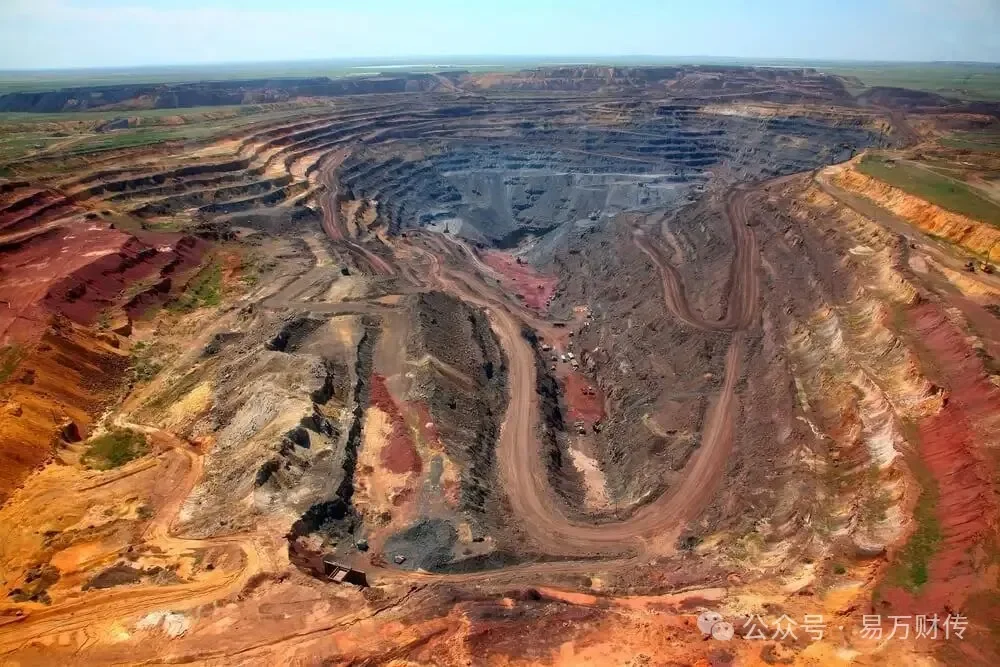
First, Reuters described Greenland as a “mineral-rich Arctic island” and cited a 2023 survey indicating that 25 of 34 critical raw materials identified by the EU are present in Greenland.
Second, Reuters also reported that the Trump administration had discussed taking an equity stake in a company pursuing a local rare-earths project (Critical Metals Corp, NASDAQ: CRML), and said the Trump administration stated that “all options are on the table,” including military action, arguing the territory is vital to U.S. national security and noting the U.S. already has a small military presence there.
Third, Reuters also noted constraints: oil and gas development is banned in Greenland for environmental reasons, while mining development faces regulatory and local opposition headwinds. Taken together, this forms a classic transactional sequence: elevate “resource and security value” to the maximum, then convert “political and social constraints” into negotiating leverage to extract concessions on sovereignty-adjacent issues—bases, mining rights, investment access, and governance terms.
Placed inside the broader “critical minerals–supply chain–defense-industrial base” framing, the Greenland emphasis becomes more coherent. Reuters reported on January 12 that the United States convened G7 members plus Australia, South Korea, and India in Washington to discuss reducing dependence on China for rare earths, including ideas such as setting a rare-earth “price floor” and establishing new supply partnerships. The same report cited International Energy Agency figures indicating that across refining of key minerals—copper, lithium, cobalt, graphite, rare earths—China’s share is roughly 47%–87%.
Reuters then reported on January 14 that Trump would temporarily refrain from imposing new tariffs on critical minerals, instead pushing negotiations with trade partners to secure overseas supply, and referenced policy tools such as “price floors / minimum import prices.” The combined message is that the United States is not satisfied with generic “de-risking” language; it is attempting to reshape critical minerals into strategically priced goods—explicitly subject to policy-defined market structure. That logic aligns directly with why Greenland is being pulled to the foreground.
Iran: A “Stress Test”
The Iran track reads as a stress test on multiple dimensions.
On one side are sanctions and moral framing: the U.S. Treasury announced on January 14 sanctions against parties deemed responsible for “Iran’s brutal suppression of peaceful protests,” naming multiple entities linked to Iranian law enforcement and intelligence.
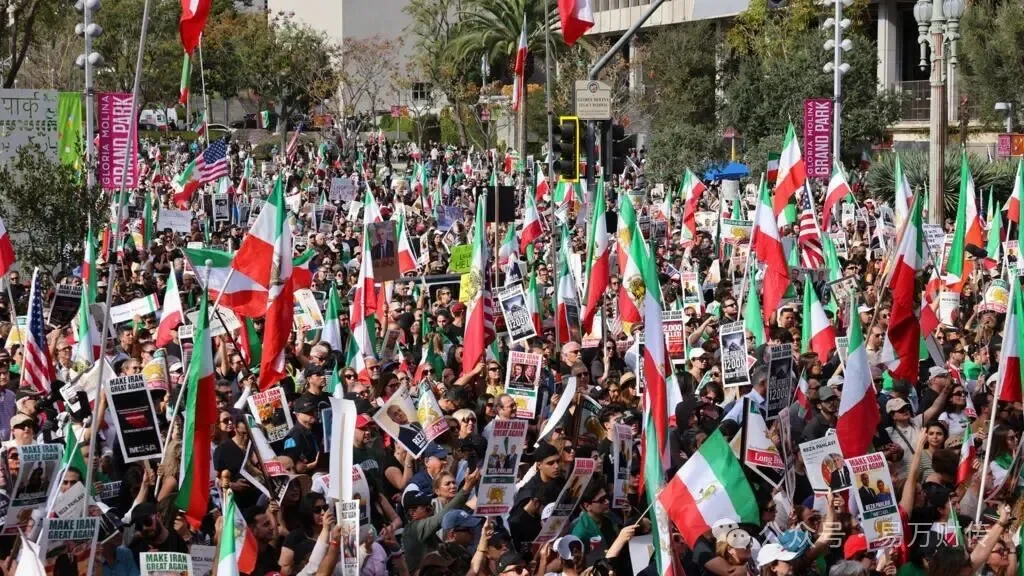
On the other side is regional posture and risk premia: Reuters reported on January 14 that certain personnel at Qatar’s Al Udeid Air Base were advised to depart, against a backdrop of Washington issuing warnings that it might intervene to protect Iranian protesters, while Iranian officials signaled that if attacked by the United States, Iran would strike U.S. bases in the region. This cadence—posture adjustment, public warnings, then sanctions—functions in markets primarily by lifting uncertainty: escalation is not the base case, but probabilities are forced to be repriced.
I also treat the Houthis’ financial and smuggling networks as part of the Iran line. A U.S. Treasury press release on January 16 said it was increasing pressure on Houthi smuggling and illicit revenue networks, naming facilitators and companies linked to Iran’s Islamic Revolutionary Guard Corps–Quds Force. The signal is that the United States is not only targeting Iran domestically; it is treating the funding rails of proxy networks as strikeable targets. That can influence Red Sea shipping risk, insurance costs, and the freight curve for energy and industrial goods—ultimately feeding back into inflation expectations and rate expectations.
One Strategy, Three Tracks
Taken together, these three tracks appear to serve a single, more internally consistent strategy.
1) Rebuilding the resource base under great-power competition.
Critical minerals (rare earths/magnet materials/battery metals) and energy—especially heavy crude that can create incremental supply relatively quickly—are being advanced in parallel. The objective is not simply commercial gain; it is to shift key bottlenecks for defense, semiconductors, energy transition, and industrial systems away from “China-dominated refining and export control.”
2) Repricing allies.
On Greenland, tariffs are used as leverage to force the EU to bring sovereignty and security questions into economic negotiation. The EU response—tariff lists and the Anti-Coercion Instrument—also pushes the transatlantic relationship toward a more explicit posture of reciprocal bargaining.
3) Narrative and deployment optionality for potential military action.
On Iran, sanctions and the “protecting protesters” framing elevate a legitimacy narrative, while base personnel posture adjustments and external warnings preserve operational room for escalation.
A Related Signal: New U.S.-Led Mechanisms for Conflict Management and Reconstruction Finance
Reuters’ consecutive reporting on a post-Gaza “security committee” concept illustrates a broader trend: the United States appears to be testing a new, U.S.-led “club” to assume organizational roles in mediation and reconstruction financing. Reuters reported on January 16 that the United States invited multiple countries to join such a mechanism, envisioned to address Gaza first and then extend to other conflicts; some diplomats worried it could undermine UN work and existing frameworks.
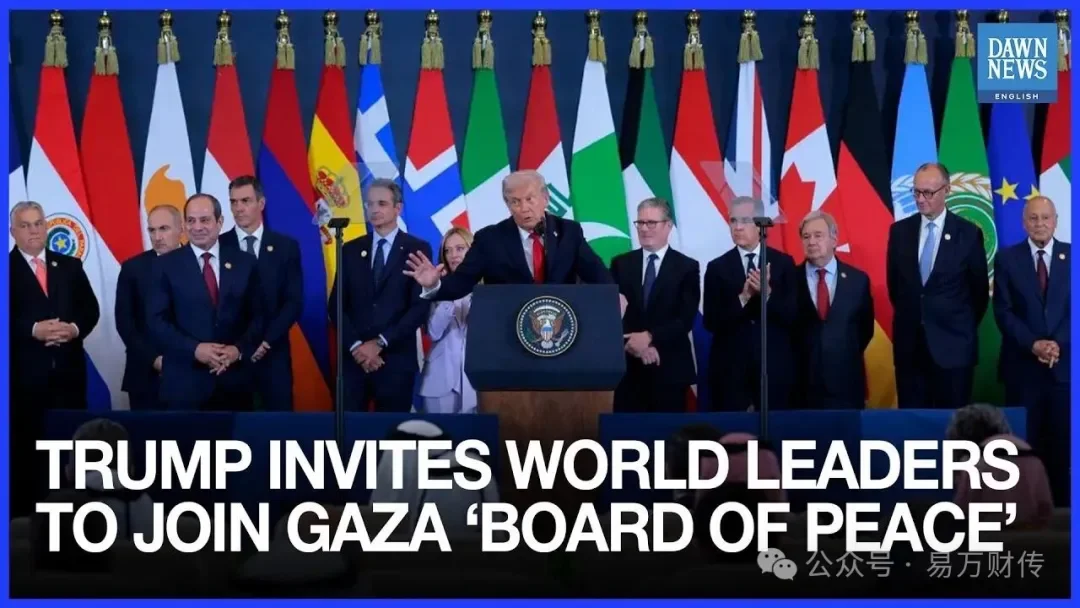
I am not making a directional bet on whether this mechanism ultimately succeeds. What matters is that once such initiatives are repeatedly proposed—and move into executional steps (invitations issued, participant lists drafted, charters negotiated, milestones advanced)—actors begin planning and allocating resources around the new framework. Future mediation and reconstruction starts to resemble a project model of “like-minded country club + capital and security commitments,” rather than relying exclusively on the UN or a single multilateral pathway.
What Are the Likely Consequences?
Structural consequence #1: “Sanctions as a commoditized tool.”
Venezuela’s license expansion, buyer lists, and settlement-account arrangements turn sanctions into a finely tunable economic policy instrument. If this proves effective, it becomes easier to replicate in other theaters.
Structural consequence #2: Higher friction costs inside the alliance system.
When a sovereignty issue such as Greenland is explicitly linked to tariff leverage, the EU is forced to place countermeasures—including restrictions in services trade and investment—on the table. The transatlantic relationship risks sliding from “values alliance” toward “reciprocal deterrence.”
Structural consequence #3: A more “gap-prone” Middle East risk premium.
War is unlikely to be priced as a daily base case. But when base personnel departure advisories, retaliatory threats, and sanctions appear simultaneously, oil and gold become more susceptible to nonlinear jumps, with volatility transmitting into shipping, defense, and energy services.
Precious Metals: Not Simply “A More Chaotic World,” but Three Chains Compounding
The core drivers for precious metals are more specific than general disorder:
Higher perceived probabilities of geopolitical escalation driving safe-haven demand (Iran/Red Sea/base security).
Supply-chain restructuring and tariff confrontation extending the horizon of inflation uncertainty (EU counter-coercion tools spanning services and investment imply more durable friction).
“Policy pricing” of critical minerals makes long-cycle resource capex resemble state projects—longer duration, larger forecast error—raising the discount rate via a higher risk premium.
Gold and Silver in Modest Retreat After Surging to Record Highs — Bloomberg
U.S. Equities: A More Tensioned Transmission
The equity transmission is more conflicted.
On one hand, critical minerals and supply-chain de-risking can support U.S. domestic capex and parts of the industrial stack—mining, processing, defense, selected industrials and materials.
On the other hand, tariff escalation and EU retaliation directly pressure multinational margins and broader risk appetite. If Europe expands retaliation into services trade, investment flows, and digital services, large U.S. technology and financial firms may be forced to reprice tail risks around compliance and market access.
A more realistic path is that the index level does not necessarily break immediately, but volatility rises, sector dispersion intensifies, and the “geopolitics–tariffs–inflation expectations” feedback into rates makes the valuation anchor materially more sensitive.
