

Ewon Capital 2026 Investment Memorandum
In 2026, at a pivotal juncture for global investing, we are witnessing an unprecedented paradigm shift.
As you may already sense, the macro landscape is increasingly opaque:
Geopolitical spillovers (e.g., the recent Venezuela situation and its impact on energy markets)
Ongoing reconfiguration of global supply chains
Escalating bargaining and brinkmanship in tariffs and trade policy
These forces inject substantial short-term “noise” into markets. For long-term, conviction-driven investors, the more turbulent the surface, the more essential it becomes to identify the highest-certainty North Star: Artificial Intelligence.
Cutting Through the Fog: The 2026 Investment Thesis and the “Certainty” of AI
I. Macro Backdrop: Seeking Hard Assets Amid Volatility
As we enter 2026, the global economy appears to be in a delicate phase of moderate expansion. Major central banks—led by the Federal Reserve—are moving toward a more normalized policy stance. Inflation has cooled but remains sticky. In this setting, the traditional growth model is running into structural ceilings:
Labor scarcity: Global aging trends are pushing labor costs higher in an effectively irreversible manner.
Productivity constraints: The easy gains from the internet dividend have largely been exhausted; enterprises urgently need new levers to drive cost efficiency and output gains.
This is why AI is not a “choice,” but a necessity. As geopolitics raises trade friction and the cost of doing business across borders, the only scalable offset is a step-change in productivity—powered by AI.
II. 2026: AI Shifts from a “Compute Race” to Monetization
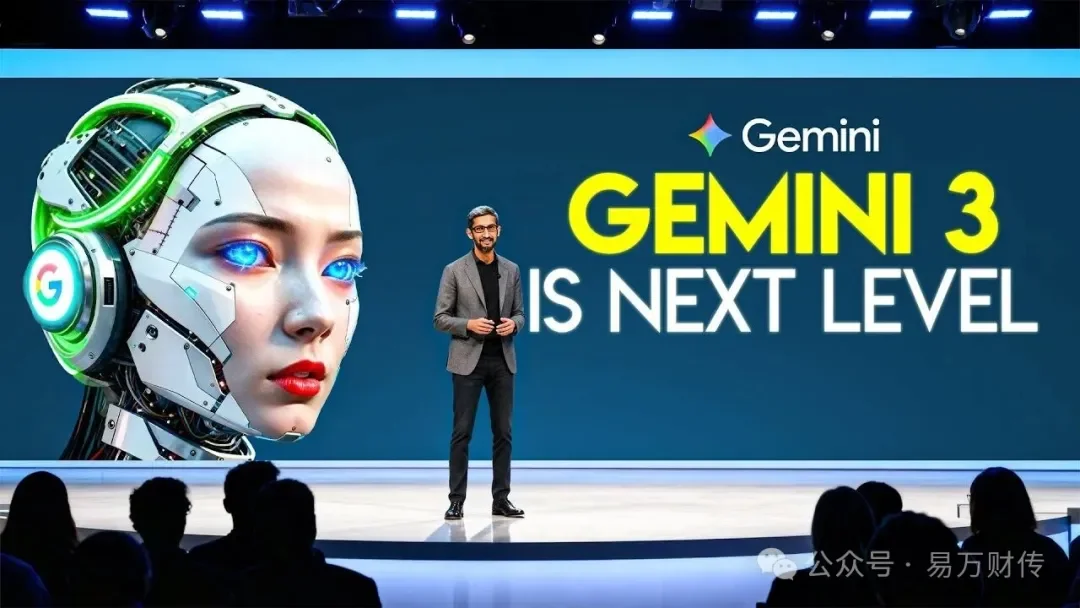
If 2023–2024 represented AI’s infrastructure buildout phase (buying the “picks and shovels,” building the power plants), then 2026 is shaping up to be the breakout year for application-driven value creation. Three core trends define the current trajectory:
From “chatboxes” to agents:
AI is no longer limited to answering questions. It is developing long-horizon memory and the ability to execute complex tasks autonomously. By 2026, agents can operate across departments and software stacks to complete projects independently—reshaping valuation frameworks across the software sector.The rise of embodied intelligence:
AI is moving into the physical world. As humanoid robotics supply chains mature, AI’s “brain” begins to pair with a physical “body.” This is not merely technological progress; it represents the most direct solution to labor scarcity in manufacturing and other labor-intensive industries.Deep coupling between energy and AI:
A widely repeated investment maxim now holds: “AI ultimately converges on energy.” Supporting AI increasingly means supporting next-generation grids, nuclear power, and advanced thermal management. Energy is becoming a critical constraint—and therefore a strategic control point—in the AI cycle.
III. Investor Framework: How to Position for the Second Half of AI
If AI is the foundational layer of the future, then investing in 2026 is no longer about chasing headlines—it requires going deeper into the industrial capillaries to identify defensible moats and durable cash flow potential.
1) Shift from “compute alone” to a full-stack resource view
In prior years, the market focused heavily on GPUs. By 2026, compute is increasingly treated like electricity—a foundational commodity. Sophisticated capital is rotating toward the “hard infrastructure” that enables scalable compute:
Advanced liquid cooling and thermal solutions addressing energy-efficiency constraints
Next-generation optical connectivity supporting massive AI data transport
More importantly, investors should internalize the idea that energy is a binding constraint. Companies enabling stable, clean baseload supply—such as small modular reactors (SMRs) or high-impact grid modernization—are emerging as the hidden levers of the AI competitive cycle.
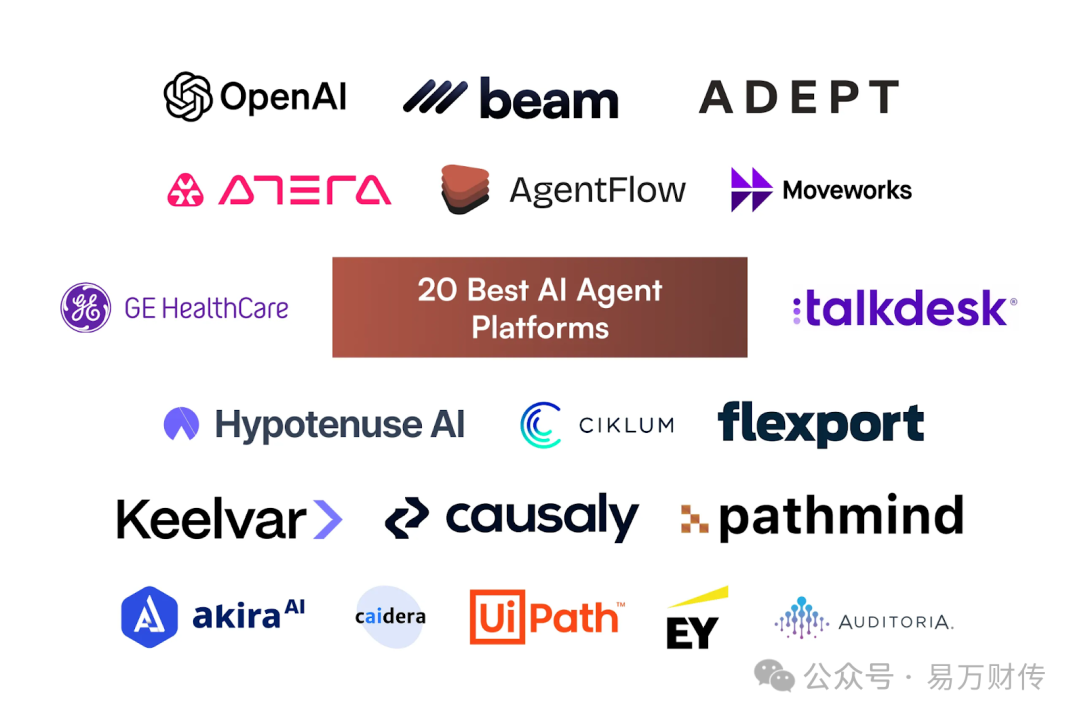
2) Focus on the evolution from “tools” to “employees”: agent commercialization
In the application layer, the question is no longer which companies have “integrated AI,” but which companies are being re-architected by AI.
The benchmark companies of 2026 are those building agents with true autonomous decision-making and execution. This transition implies a shift in monetization from seat-based pricing to outcome-based pricing.
In verticals such as medical diagnostics, legal audit, and precision engineering design, AI is moving from assistive tooling to result-delivering digital labor. Ownership of high-quality proprietary domain data increasingly becomes the decisive ticket to win.
3) Treat embodied intelligence as the physical-world entry point
AI is not meant to remain behind a screen. Through sensors and actuators, it is entering reality. With early maturation of humanoid robot supply chains in 2026, AI has found a body capable of work.
This is a multi-trillion-dollar opportunity set spanning key components such as:
Precision reducers
Tactile sensing systems
High energy-density motors
When AI can move parts in factories and care for aging populations at home, its productivity impact will no longer be incremental—it becomes multiplicative.
Strategy summary
The portfolio approach implied by this framework is:
Anchor exposure in foundational infrastructure as the “ballast”
Concentrate on vertical-domain agents as the “growth engine”
Proactively allocate to embodied intelligence as an underappreciated, high-upside frontier
Closing: Conviction and Patience
The hardest part of investing is not identifying the trend; it is maintaining discipline through the volatility while the trend plays out.
Debate persists over whether AI reflects “bubble” dynamics. History suggests that every transformative technological revolution encounters skepticism in its early phases. Today’s volatility is surface-level turbulence; the AI-driven Fourth Industrial Revolution is the deeper tide.
Our conviction remains: AI is the future. It is not merely an industry—it is the operating system beneath every industry.
“Stay clear-headed when others are fearful; stay resolute when the direction is clear.”
